

GRI Standards 2026: The Global Benchmark for Sustainability Reporting
- C² Team
- Jan 25
- 3 min read
Updated: Feb 3
In the complex world of ESG (Environmental, Social, and Governance), one framework stands tall as the international "common language" for reporting: the GRI Standards (Global Reporting Initiative).
While certifications like EcoVadis score your performance, the GRI Standards provide the framework for how you disclose that performance to the world. Used by over 10,000 organizations—including 78% of the world’s largest corporations—adopting GRI is the definitive step toward total transparency.
Whether you are a multinational corporation or a growing SME, this guide will demystify the GRI framework and show you how to leverage it for business growth.
What Are the GRI Standards?
The GRI Standards are a modular system of interrelated standards that allow organizations to publicly report the impacts of their activities on the economy, environment, and people. Unlike other frameworks that might focus primarily on financial risk (how climate change hurts you), GRI focuses on Impact Reporting (how you impact the world). This "inside-out" perspective is crucial for building trust with customers, employees, and communities.
The 3-Part Modular System
One of the strengths of the GRI Standards is their flexibility. You don't have to report on everything—only what matters. The system is divided into three series:
Universal Standards (GRI 1, 2, 3): Required for all organizations. These cover your foundation, general disclosures (governance, strategy), and how you determine what is material.
Sector Standards: Specific to your industry (e.g., Oil & Gas, Agriculture, Mining). These ensure you don't skip the topics that matter most in your field.
Topic Standards: These are the specific subjects you report on, such as Water & Effluents (GRI 303), Anti-corruption (GRI 205), or Occupational Health and Safety (GRI 403).

Materiality: The Heart of GRI
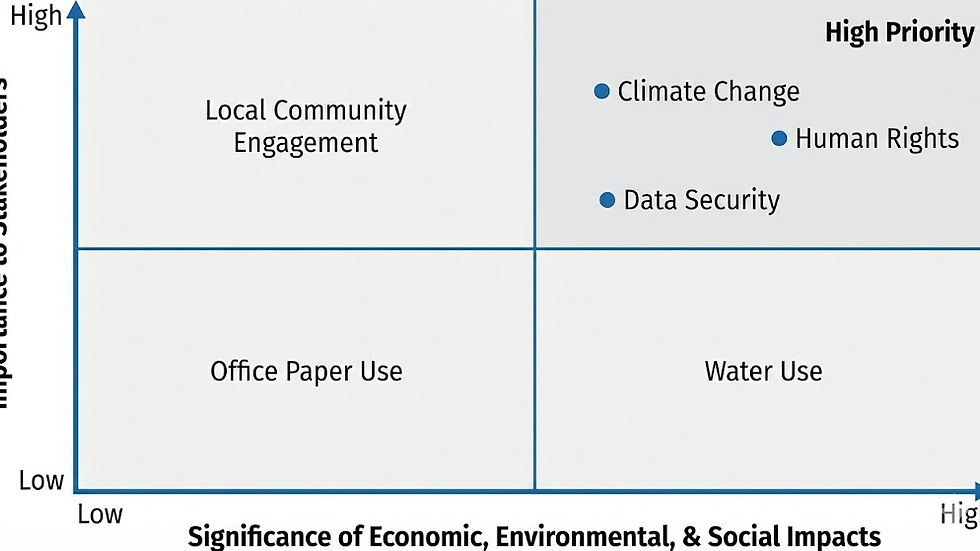
You cannot (and should not) report on everything. The core of a GRI-compliant report is the Materiality Assessment.
This process involves identifying which topics are most significant to your business and your stakeholders. For 2026, the focus is heavily on "Double Materiality"—acknowledging both the financial impact on your company and your company's impact on society.
Once you identify your material topics (e.g., "Waste Management" or "Diversity"), you only use the relevant Topic Standards for those specific areas. This keeps your report focused and relevant.
Why Choose the GRI Standards?
Adopting the GRI Standards is a rigorous process, but the dividends are substantial:
Global Comparability: Investors can compare your data apples-to-apples with competitors in Tokyo, New York, or London.
Regulatory Readiness: GRI aligns closely with upcoming mandatory regulations like the EU's CSRD (Corporate Sustainability Reporting Directive) and India's BRSR (Business Responsibility and Sustainability Report).
Stakeholder Trust: It proves you aren't "greenwashing." By following a standardized methodology, you show you have nothing to hide.
How to Get Started
Building a GRI report is a journey, not a sprint.
Engage Stakeholders: Talk to your investors, customers, and employees to understand what they care about.
Define Material Topics: Use the feedback to create your Materiality Matrix.
Gather Data: Collect the specific metrics required by the relevant Topic Standards (e.g., total weight of waste diverted from disposal).
Publish & Index: Release your report with a "GRI Content Index" so readers can easily find the data they need.
The Importance of Transparency
Transparency is key in today’s business landscape. When you adopt the GRI Standards, you open the door to meaningful conversations with your stakeholders. They want to know how your operations affect the environment and society. By being transparent, you build credibility and trust.
Leveraging GRI for Competitive Advantage
In a world where sustainability is no longer optional, leveraging the GRI Standards can set you apart. Companies that embrace these standards often find new opportunities for innovation and efficiency. They can identify areas for improvement and showcase their commitment to sustainability.
Take the Guesswork Out of Reporting
Writing a report that meets the strict criteria of the GRI Standards requires precision, data accuracy, and a deep understanding of the framework. A non-compliant report can do more harm than good.
Let C² guide you through the process. From conducting your materiality assessment to drafting the final disclosure, we ensure your report is compliant, compelling, and world-class.
👉 𝐂𝐨𝐧𝐧𝐞𝐜𝐭 𝐰𝐢𝐭𝐡 C² (Csquare) 𝐭𝐨 𝐠𝐞𝐭 𝐬𝐭𝐚𝐫𝐭𝐞𝐝!
🌐 𝐜𝐬𝐪𝐮𝐚𝐫𝐞𝐜𝐚𝐫𝐛𝐨𝐧.𝐜𝐨𝐦
✉️ 𝐢𝐧𝐟𝐨@𝐜𝐬𝐪𝐮𝐚𝐫𝐞.𝐜𝐨.𝐢𝐧
Comments