

𝐂𝐚𝐫𝐛𝐨𝐧 𝐂𝐚𝐩𝐭𝐮𝐫𝐞, 𝐔𝐭𝐢𝐥𝐢𝐳𝐚𝐭𝐢𝐨𝐧, 𝐚𝐧𝐝 𝐒𝐭𝐨𝐫𝐚𝐠𝐞 (𝐂𝐂𝐔𝐒): 𝐂𝐂𝐔𝐒 𝐂𝐥𝐢𝐦𝐚𝐭𝐞 𝐒𝐨𝐥𝐮𝐭𝐢𝐨𝐧
- C² Team
- Oct 28, 2025
- 2 min read
𝑾𝒉𝒂𝒕 𝒊𝒔 𝑪𝑪𝑼𝑺?
Carbon Capture, Utilization, and Storage represents breakthrough technology that captures CO₂ emissions at their source or directly from the atmosphere, then transforms this "waste" into valuable products or stores it permanently underground.
𝑾𝒉𝒚 𝑪𝑪𝑼𝑺 𝒊𝒔 𝑵𝒐𝒏-𝑵𝒆𝒈𝒐𝒕𝒊𝒂𝒃𝒍𝒆 𝒇𝒐𝒓 𝑰𝒏𝒅𝒖𝒔𝒕𝒓𝒚
For hard-to-abate sectors, CCUS is essential.
In the 𝑐𝑒𝑚𝑒𝑛𝑡 𝑖𝑛𝑑𝑢𝑠𝑡𝑟𝑦, where two-thirds of emissions come from the calcination process, it represents the only viable pathway to net-zero.
For 𝑠𝑡𝑒𝑒𝑙 𝑝𝑟𝑜𝑑𝑢𝑐𝑡𝑖𝑜𝑛, it offers a way to abate a massive 56% of emissions, decarbonizing the backbone of our infrastructure.
𝑭𝒓𝒐𝒎 𝑻𝒉𝒆𝒐𝒓𝒚 𝒕𝒐 𝑹𝒆𝒂𝒍𝒊𝒕𝒚: 𝑺𝒖𝒄𝒄𝒆𝒔𝒔 𝒊𝒏 𝑨𝒄𝒕𝒊𝒐𝒏
This technology is already making an impact globally. Groundbreaking projects are proving the model:
• 𝐇𝐞𝐢𝐝𝐞𝐥𝐛𝐞𝐫𝐠 𝐌𝐚𝐭𝐞𝐫𝐢𝐚𝐥𝐬' Brevik plant stands as the world's first industrial-scale CCS facility for cement.
• 𝐀𝐫𝐚𝐦𝐜𝐨'𝐬 𝐉𝐮𝐛𝐚𝐢𝐥 𝐡𝐮𝐛 is set to capture an enormous 9 million tons of CO₂ annually by 2028.
• 𝐌𝐨𝐛𝐢𝐥𝐞 𝐜𝐚𝐩𝐭𝐮𝐫𝐞 𝐭𝐞𝐜𝐡𝐧𝐨𝐥𝐨𝐠𝐲 is even successfully capturing 40% of CO₂ directly from vehicle exhaust.
𝑻𝒉𝒆 𝑪𝒍𝒊𝒎𝒂𝒕𝒆 𝑰𝒎𝒑𝒆𝒓𝒂𝒕𝒊𝒗𝒆:
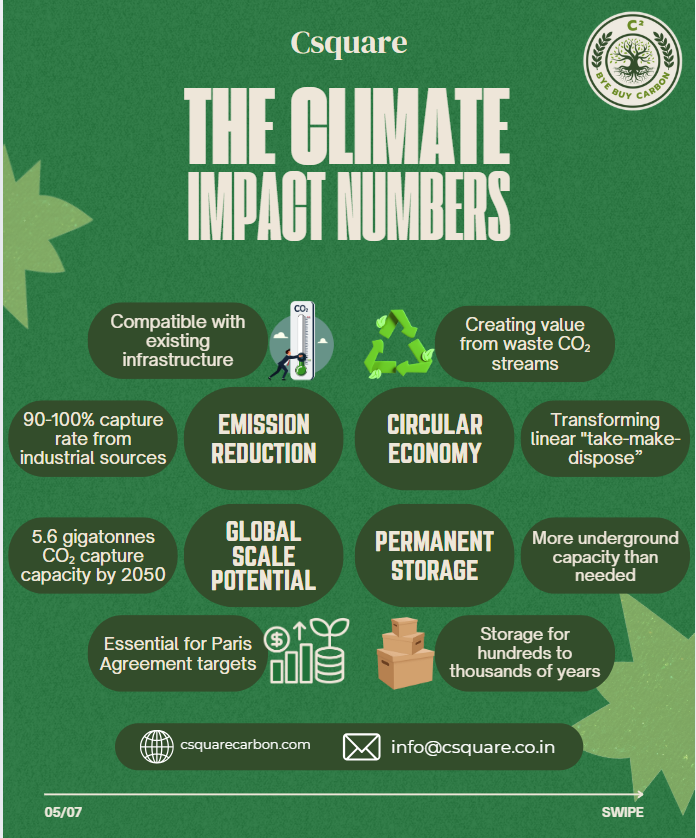
With IEA projecting 𝟓.𝟔 𝐠𝐢𝐠𝐚𝐭𝐨𝐧𝐧𝐞𝐬 𝐚𝐧𝐧𝐮𝐚𝐥 𝐂𝐎₂ 𝐜𝐚𝐩𝐭𝐮𝐫𝐞 𝐩𝐨𝐭𝐞𝐧𝐭𝐢𝐚𝐥 𝐛𝐲 𝟐𝟎𝟓𝟎, CCUS isn't optional, it's critical infrastructure for climate goals. For industries like cement, steel, and chemicals, CCUS represents the primary pathway to decarbonization.
𝑴𝒂𝒓𝒌𝒆𝒕 𝑴𝒐𝒎𝒆𝒏𝒕𝒖𝒎 𝒊𝒔 𝑬𝒙𝒑𝒍𝒐𝒔𝒊𝒗𝒆:
The numbers speak volumes, CCUS market growing at 25% CAGR, reaching USD 17.75 billion by 2030. Global capture capacity projected at 2.5 gigatonnes annually by 2045. Over 200 new facilities planned for operation by 2030, capturing 220+ million tonnes CO₂ yearly.
𝒀𝒐𝒖𝒓 𝑹𝒐𝒍𝒆 𝒊𝒏 𝒕𝒉𝒆 𝑪𝑪𝑼𝑺 𝑭𝒖𝒕𝒖𝒓𝒆
CCUS is moving from demonstration to full-scale deployment. The question is no longer if it will be a core part of our climate strategy, but how quickly we can scale it.
𝑾𝒉𝒂𝒕 𝒔𝒕𝒆𝒑𝒔 𝒊𝒔 𝒚𝒐𝒖𝒓 𝒐𝒓𝒈𝒂𝒏𝒊𝒛𝒂𝒕𝒊𝒐𝒏 𝒕𝒂𝒌𝒊𝒏𝒈 𝒕𝒐 𝒊𝒏𝒕𝒆𝒈𝒓𝒂𝒕𝒆 𝒕𝒉𝒊𝒔 𝒄𝒓𝒖𝒄𝒊𝒂𝒍 𝒕𝒆𝒄𝒉𝒏𝒐𝒍𝒐𝒈𝒚 𝒊𝒏𝒕𝒐 𝒚𝒐𝒖𝒓 𝒅𝒆𝒄𝒂𝒓𝒃𝒐𝒏𝒊𝒛𝒂𝒕𝒊𝒐𝒏 𝒔𝒕𝒓𝒂𝒕𝒆𝒈𝒚?
𝐈𝐬 𝐲𝐨𝐮𝐫 𝐨𝐫𝐠𝐚𝐧𝐢𝐳𝐚𝐭𝐢𝐨𝐧 𝐭𝐫𝐮𝐥𝐲 𝐫𝐞𝐚𝐝𝐲 𝐟𝐨𝐫 𝐭𝐡𝐞 𝐜𝐚𝐫𝐛𝐨𝐧-𝐧𝐞𝐮𝐭𝐫𝐚𝐥 𝐟𝐮𝐭𝐮𝐫𝐞?
👉 𝐂𝐨𝐧𝐧𝐞𝐜𝐭 𝐰𝐢𝐭𝐡 𝐂² (𝐂𝐬𝐪𝐮𝐚𝐫𝐞) 𝐭𝐨 𝐠𝐞𝐭 𝐬𝐭𝐚𝐫𝐭𝐞𝐝!
✉️ 𝐢𝐧𝐟𝐨@𝐜𝐬𝐪𝐮𝐚𝐫𝐞.𝐜𝐨.𝐢𝐧


Comments